 Bellingham Exterior
 Siding Repair Built for Birchwood's Climate
Birchwood sits close enough to Bellingham Bay and the surrounding tree cover that its homes take a particular kind of beating: salt-tinged air off the water, driving rain that comes sideways during winter storms, and a moss season that runs longer here than almost anywhere else in Washington. Siding that looks fine from the street can be hiding real damage underneath, and siding repair done without understanding those local conditions tends to fail again within a year or two.
This page is about one job, done right, in one area: diagnosing and repairing damaged siding on Birchwood homes. Not a general overview of siding services — the specific work of figuring out what's actually wrong with your walls and fixing it so it stays fixed.
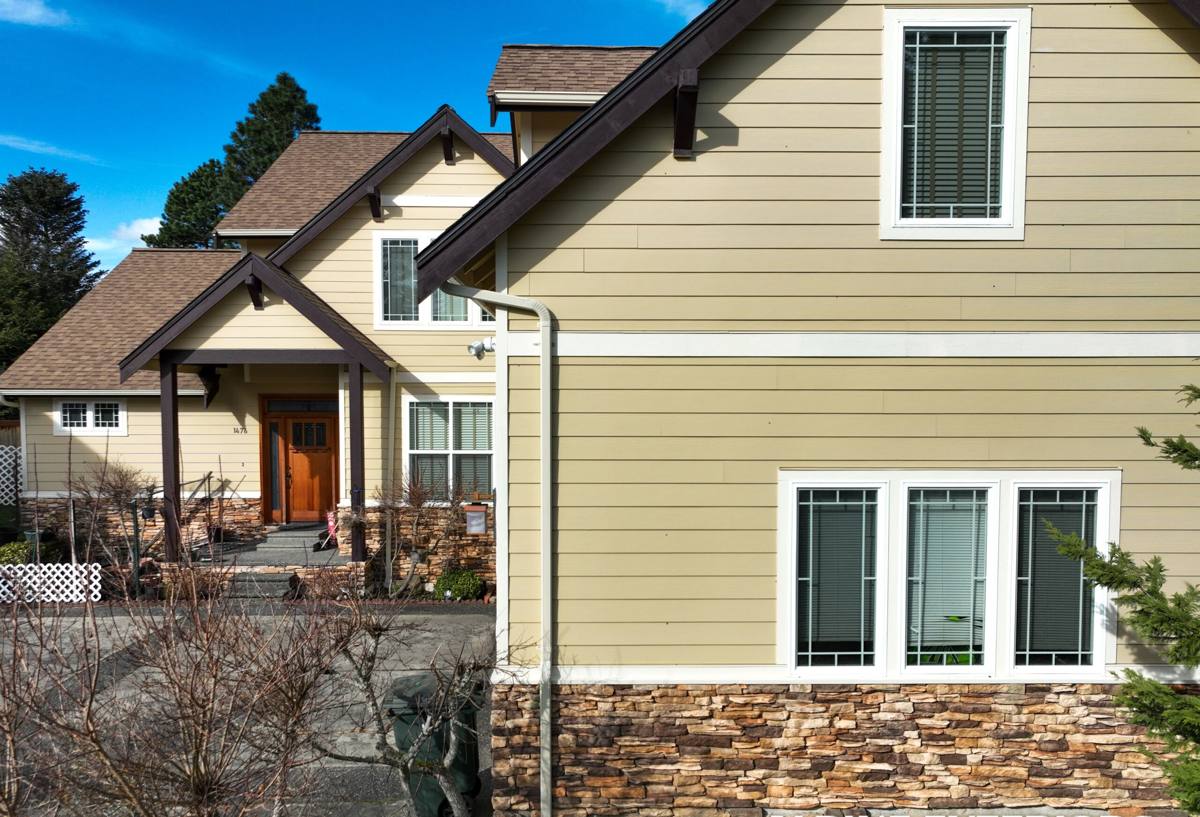
What Bellingham's Climate Does to Siding
Moisture Is the Root of Almost Every Repair Call
Whatcom County gets a lot of rain, and it doesn't come in short bursts — it settles in for days. Combined with onshore wind, that means siding on Birchwood homes takes moisture from multiple directions: driving rain hitting wall faces directly, splashback near grade, and slow saturation around any gap where flashing, caulking, or trim has failed. Wood-based siding products (cedar, primed spruce, and OSB-substrate products like LP SmartSide) are especially vulnerable because their core material absorbs water once the factory coating is compromised, and once that happens the damage spreads under the surface long before it's visible.
Salt Air and Corrosion
Proximity to the bay adds a slow, steady corrosive element. Fasteners, flashing, and any exposed metal trim take longer to fail here than they would inland, but they do fail — and a rusted nail head or corroded flashing seam is a common hidden cause of a leak that shows up as a soft or discolored siding panel two feet away from the actual entry point.
Moss, Shade, and Prolonged Dampness
Birchwood's tree cover keeps a lot of siding in shade for large parts of the day, which is good for cooling in summer but bad for drying time after rain. Moss and algae take hold on siding that stays damp, and once established they hold moisture against the surface almost permanently. On wood-based products, that constant dampness accelerates rot. On any siding, heavy moss growth traps debris in seams and butt joints, which is exactly where water intrusion tends to start.
Signs a Birchwood Home Needs Siding Repair
Most homeowners notice siding problems only after they've become visible from the curb, but by then the damage is usually well established. Here's what we look for during an inspection, and what you can check yourself before calling anyone out:
- Soft, spongy, or bulging spots when you press on a wall — a strong sign of moisture trapped behind the surface
- Paint that's bubbling, peeling, or flaking in a localized area rather than evenly across the wall
- Visible gaps, cracks, or separation at panel seams, corners, and butt joints
- Persistent moss or dark staining that keeps returning even after cleaning
- Warping, cupping, or delamination of panels, especially near ground level or under windows
- Musty smell or visible staining on interior walls that back onto exterior siding
- Fastener heads that are rusted, popped, or visibly corroded
- Damage clustered near roof valleys, deck ledgers, or anywhere two building surfaces meet
Any one of these can be a minor fix. Several together, especially clustered in one area, usually mean water has been getting behind the siding for a while and the repair needs to address the cause, not just the symptom.
What a Correct Repair Actually Involves
Diagnosis Before Demo
The most common mistake in siding repair is replacing the visible damaged panel without figuring out how water got in. If the entry point — a failed flashing detail, a gap in caulking, a butt joint with no proper overlap — isn't corrected, the new panel fails the same way within a season or two. A correct repair starts with pulling back enough material to see the underlying condition: the water-resistive barrier, the flashing, the framing if it's been exposed to water long enough.
Matching Materials and Methods
Repairs also have to match the performance of the surrounding wall, not just the look of it. That means using compatible fasteners, correct nailing patterns, proper clearances from grade and roof lines, and flashing details that shed water the way they're supposed to. A patch that looks seamless but wasn't installed to the same standard as a full installation is a repair that's just delaying the next call.
When Repair Isn't the Right Call
Sometimes the honest answer is that a section — or the whole elevation — is past the point where a repair makes sense. If the substrate underneath the siding has been compromised by rot, or if damage is spread across multiple areas rather than isolated, patching individual spots can end up costing more over a few years than doing a proper section replacement once. We'll tell you which situation you're in before we quote anything.
Repair vs. Replacement: How We Decide
| Situation | Usual Recommendation |
|---|---|
| Isolated panel damage, framing and barrier intact | Targeted repair of the affected section |
| Damage clustered around one flashing or trim detail | Repair the panel and correct the underlying flashing issue |
| Rot found in sheathing or framing during inspection | Open repair scope to address structure, then re-side that section |
| Damage spread across multiple elevations | Evaluate full replacement rather than repeated patch repairs |
| Original siding is wood-based and near end of service life | Discuss replacement with a more durable material |
Why We Repair and Replace With James Hardie Fiber Cement
We install and repair with James Hardie fiber cement siding exclusively. We don't install vinyl, LP SmartSide, Cemplank, Allura, primed spruce, or cedar, and when a repair job reveals that a home's existing siding is one of those materials and beyond a reasonable patch, we'll say so plainly rather than push a like-for-like replacement that we don't think holds up in this climate.
Wood-based products depend on their factory coating staying intact to keep moisture out of the core material — once that coating is breached, water gets into the substrate itself, which is exactly the failure mode Bellingham's wet, shaded conditions accelerate. Vinyl handles moisture better but can warp or crack with age and temperature swings, and it's not something we install or repair to a standard we're willing to stand behind. James Hardie's fiber cement is non-combustible, engineered for wet climates in its HZ5 product line, and finished with a factory-applied ColorPlus coating that's built to hold up under prolonged damp exposure without relying on field-applied paint as the only line of defense. When a repair calls for new material, that's what we use — and it's backed by a strong transferable warranty that matters more in a climate like this one.
Our Repair Process
- On-site inspection. We look at the visible damage and check the areas around it — corners, flashing, trim, and anywhere else water could be entering.
- Diagnosis. We open up affected sections as needed to confirm what's happening behind the siding before quoting anything.
- Honest scope. You get a clear explanation of what's damaged, what's causing it, and whether repair or partial replacement is the right fix — no upsell, no guesswork.
- Correction, not just patching. We fix the underlying cause — flashing, sealant, water-resistive barrier — at the same time as the visible repair.
- Quality material and installation. Repairs done with James Hardie fiber cement, installed to manufacturer spec so the repaired section performs like the rest of the wall.
- Cleanup and walkthrough. We show you what was done and what to watch for going forward.
What Affects the Cost of a Siding Repair
| Factor | Why It Matters |
|---|---|
| Extent of moisture damage | Surface-level damage costs far less than repairs involving compromised sheathing or framing |
| Accessibility of the affected wall | Second-story sections, areas near decks, or spots requiring scaffolding add labor time |
| Number of separate damaged areas | Several small repair zones can add up to more labor than one larger contiguous section |
| Underlying cause | A repair that also requires new flashing or barrier work costs more than a straightforward panel swap |
| Material matching | Matching existing James Hardie color and profile is straightforward; matching a discontinued or non-Hardie product is not |
We won't give you a number over the phone with no inspection — every siding repair estimate we give follows an actual look at the damage.
Why a Local Crew Matters in Birchwood
A crew that works Whatcom County regularly knows what Bellingham's mix of salt air, rain, and shade does to a wall over time, and that shapes how we diagnose and repair damage — we're not guessing at what's typical for this climate, we're seeing it on a regular basis. Local also means we're accountable: we're not driving in from out of the area for one job and gone. If a repair needs a follow-up look after the next storm season, we're still here.
If you're seeing signs of siding damage on a Birchwood home — soft spots, moss that won't quit, gaps at the seams, or anything else on the list above — we're happy to take a look and give you a straight answer about what it needs. The estimate is free, there's no pressure, and you'll know exactly what you're dealing with before you decide anything.