 Bellingham Exterior
 Why Sunnyland Roofs Wear Differently Than Roofs Inland
Sunnyland sits close enough to Bellingham Bay that homes here deal with a combination most inland Whatcom County neighborhoods don't: salt-laden air off the water, wind-driven rain that hits roof planes sideways instead of straight down, and a long, wet moss season that can run from early fall through late spring. None of these three things is dramatic on its own. Together, over years, they're what separates a roof that makes it to 25-30 years from one that starts showing granule loss, soft decking, or moss-lifted shingles at year 12 or 15.
Salt air accelerates corrosion on exposed metal — nails, flashing, vent housings, gutter fasteners. Driving rain finds any gap in flashing or underlayment that a calmer climate would never expose, because it's pushed by wind rather than falling straight. And moss doesn't just sit on the surface looking bad — its root structure works into the shingle mat and lifts tabs, which opens a path for water to get underneath. A roofing job done for a drier or calmer climate simply isn't built for what a Sunnyland roof actually experiences.
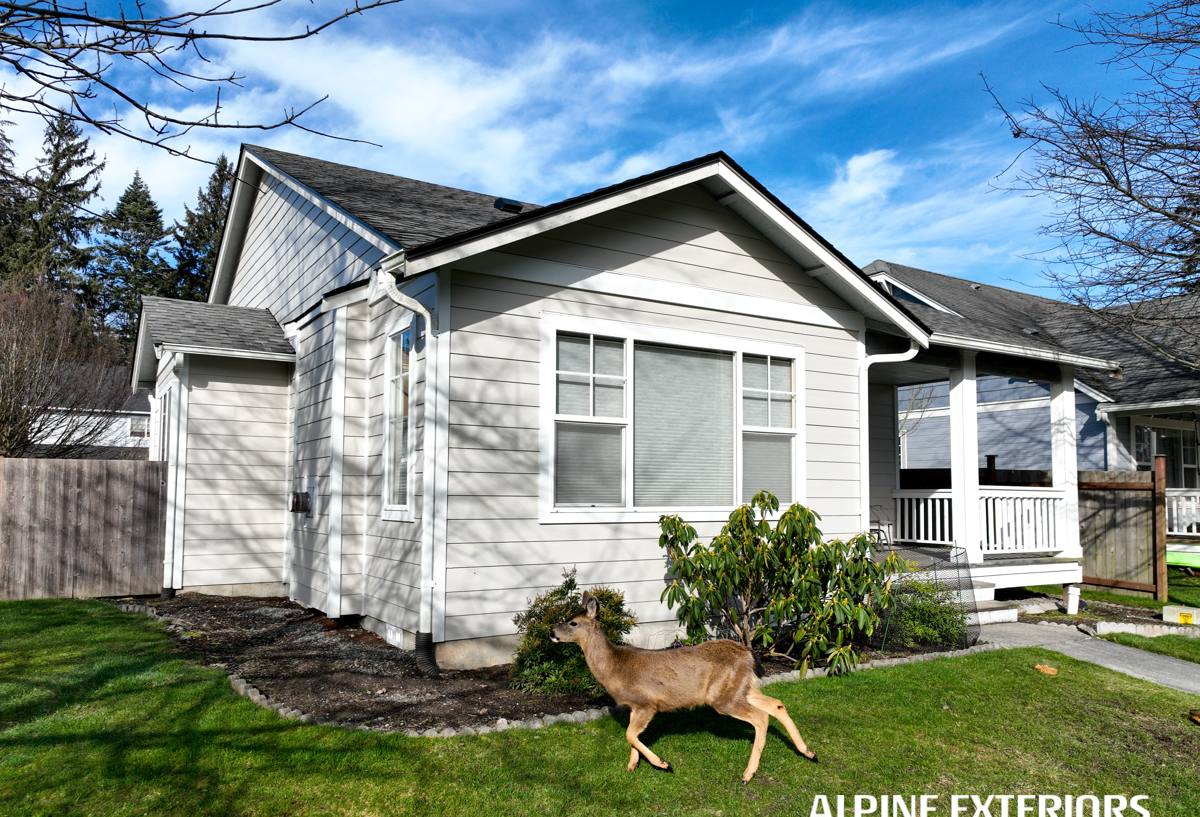
What a Correctly Built Shingle Roof Looks Like Here
"Correct" for this neighborhood isn't a different shingle brand — it's a different level of attention to the details that matter most in wind-driven rain and heavy moss pressure. A roof can use the same basic materials as one three states away and still perform very differently depending on how the details underneath were handled.
Underlayment and Water Barrier
In a climate with sideways rain, we don't treat underlayment as a formality. Self-adhering ice-and-water membrane belongs at eaves, valleys, around every penetration, and along any wall-to-roof transition — not just the code minimum. Synthetic underlayment across the field of the roof sheds wind-driven moisture better than old-style felt and holds up longer if a shingle is ever compromised before it's replaced.
Ventilation and Moisture Control
A shingle roof that can't breathe traps moisture in the attic, and trapped moisture is what turns a roof deck soft from underneath — often before any problem shows up on the surface. Balanced intake at the eaves and exhaust at the ridge keeps air moving, which matters even more here because the air itself is often damp to begin with. Poor ventilation is one of the most common reasons we see premature decking failure on roofs that otherwise look fine from the ground.
Flashing and Penetrations
Every valley, chimney, skylight curb, and pipe boot is a place water can get pushed sideways underneath the shingles. We use step flashing at walls (not just caulk and hope), metal or high-quality synthetic pipe boots that won't crack from UV and salt exposure, and valley metal or woven valleys installed to shed water at the angle it actually arrives — not just straight down.
Choosing a Shingle for Salt Air, Rain, and Moss
Not every asphalt shingle line handles this combination equally well. The differences that matter most locally are algae resistance, wind rating, and how the shingle behaves once moss or debris sits on it for a season.
| Shingle Feature | Why It Matters in Sunnyland | What We Look For |
|---|---|---|
| Algae-resistant (AR) granules | Slows the black streaking and moss-friendly surface buildup common in wet, shaded roof sections | Copper or zinc-infused granules with a real manufacturer warranty against algae staining |
| Wind rating | Gusts off the water and driving rain put more lateral stress on tabs and seals | 110+ mph rated shingles with factory sealant strips, installed with correct nail placement |
| Shingle mat quality | A denser mat resists moss root penetration and holds granules longer under constant moisture | Mid- to upper-tier laminate/architectural shingles over builder-grade 3-tab in most cases |
| Color and surface texture | Darker, deeply textured shingles can hide staining longer but may retain moisture-holding debris in the texture | A balance based on the home's sun exposure and tree cover, not just curb appeal |
Architectural (laminated) shingles are usually the better fit for this neighborhood. Their thicker profile and denser mat hold up better to moss pressure and driving rain than basic 3-tab shingles, and most quality lines now come with algae-resistant granules as standard. We'll walk through the realistic options for your home's sun exposure and tree cover rather than pushing one product line.
Our Process, Start to Finish
- On-site inspection. We walk the roof (weather permitting) and check the attic from inside — deck condition, ventilation, existing moss or algae damage, and flashing condition are all assessed before we quote anything.
- Honest scope and estimate. You get a written estimate that separates what's needed (deck repair, ventilation correction, flashing replacement) from what's optional, so there's no surprise change order mid-job.
- Deck prep. Any soft or delaminated decking gets replaced before a single shingle goes down. Covering a bad deck with new shingles just hides the problem for a year or two.
- Underlayment and flashing installation. Ice-and-water membrane at vulnerable areas, synthetic underlayment across the field, new step and valley flashing where the old flashing is reused, aged, or undersized.
- Shingle installation. Correct nail count and placement per manufacturer spec — under-nailing is one of the most common causes of wind and rain damage we find on older roofs.
- Ventilation correction if needed. If attic airflow is inadequate, we address intake and exhaust as part of the job rather than leaving it for later.
- Cleanup and magnetic sweep. Full jobsite cleanup including a magnetic nail sweep of the yard and driveway.
- Final walkthrough. We review the finished roof with you before calling the job done.
Moss, Algae, and Salt Air: What Ongoing Care Looks Like
Even a well-installed roof needs some seasonal attention in this climate. The goal isn't a moss-free roof year-round — it's catching buildup before it lifts shingles or holds moisture against the surface long enough to cause damage.
- Keep gutters clear of needles and debris, especially before the fall rains start — clogged gutters back water up under the eave edge
- Have moss physically removed (not just chemically treated) from heavily shaded roof planes every year or two before it establishes a root mat
- Trim back overhanging branches to reduce shade and debris buildup, which are the two biggest drivers of moss growth
- Rinse (don't pressure-wash) accumulated grime and salt residue from north-facing or shaded slopes periodically
- Check attic ventilation isn't blocked by insulation or storage before each wet season
- Address any granule buildup in gutters early — heavy granule loss is often the first visible sign of a shingle nearing the end of its service life
Pressure washing is worth calling out specifically: high-pressure water strips protective granules off asphalt shingles and can force water under the tabs. It does more long-term damage than the moss it removes, which is why we don't recommend it as a maintenance method.
Signs a Sunnyland Roof Needs Attention
Most roof failures in this climate don't happen suddenly — they build over a season or two of small warning signs. Homeowners who catch these early usually face a repair instead of a full replacement.
| What You See | What It Usually Means |
|---|---|
| Dark streaking or green tint on north-facing slopes | Algae or early moss growth — manageable now, worse if ignored through another wet season |
| Granules collecting in gutters or downspouts | Shingle surface wearing down; normal in small amounts with age, a concern if it's heavy or sudden |
| Shingle tabs curling or lifting at edges | Sealant strip failure or moss root intrusion — a common precursor to wind and water damage |
| Soft spots or sagging when walked (by a professional) | Deck moisture damage, often from long-term ventilation or flashing issues |
| Rust streaks near flashing or vents | Metal corrosion from salt air exposure — flashing replacement is usually due |
| Water stains on interior ceilings near exterior walls | Active leak, often at a flashing point rather than the open shingle field |
What Drives the Cost of a New Roof
Every roof is different, but the same handful of factors explain most of the price range you'll see between quotes. We'd rather walk you through these honestly than throw out a number with no context.
| Cost Factor | Why It Moves the Price |
|---|---|
| Roof size and number of planes | More squares and more valleys/hips mean more material and labor time |
| Existing deck condition | Rotten or soft decking found during tear-off adds material and labor that couldn't be quoted sight-unseen |
| Shingle tier chosen | Builder-grade 3-tab, mid-tier architectural, and premium designer lines carry different material costs |
| Roof pitch and access | Steep or hard-to-access roofs take longer and require more safety setup |
| Ventilation and flashing corrections | Fixing inadequate airflow or replacing aged flashing adds scope but prevents repeat problems |
| Number of penetrations | Chimneys, skylights, and multiple vent stacks each need individual flashing work |
As a broad range, a straightforward asphalt shingle re-roof on an average Sunnyland home typically falls in the low-to-mid five figures, with complexity, deck repair, and shingle tier pushing that up or down. We'll give you a specific number after we've actually seen your roof — not before.
Why a Crew That Already Works This Neighborhood Matters
A roofing crew that regularly works Sunnyland and the surrounding Bellingham area has already seen how salt air ages flashing, which tree-heavy streets need extra moss attention, and how the local wind pattern off the bay tends to drive rain into certain roof angles. That's not something a crew from outside the area picks up on a single job — it's pattern recognition built from working the same conditions repeatedly.
It also matters for practical reasons: local crews know the Whatcom County permitting process, are familiar with typical roof ages and construction styles in older Bellingham neighborhoods, and are around after the job is done if a question comes up down the road. A roof is a long-term investment in a specific climate — it's worth having it installed by people who understand that climate firsthand.
Get a Straightforward, No-Pressure Estimate
If your Sunnyland roof is showing moss buildup, granule loss, or you're just planning ahead, we're happy to take a look and give you an honest read on where it stands. There's no pressure and no obligation — just a clear assessment and a written estimate you can take your time with. The form below gets you started.