 Bellingham Exterior
 Roofing South Hill the Way This Hillside Actually Demands
South Hill sits up above the flats of Bellingham, which means it catches wind and weather a little differently than homes closer to the bay or tucked into the valley. It's an older, established neighborhood with a lot of mature tree canopy, sloped lots, and homes built across several different roofing eras — some with rooflines and ventilation setups that made sense decades ago but don't hold up well against what Whatcom County throws at a roof today. A new roof here isn't a generic swap-and-go job. It needs to account for shade and moisture retention from the tree cover, wind exposure on the more open, elevated sections of the hill, and the slow, steady damage that comes from months of grey, wet weather every year.
When we install a new roof in South Hill, we're not just matching what's already up there. We're building a roofing system — deck, underlayment, flashing, ventilation, and the finish material — that's suited to this specific microclimate, not a one-size-fits-all install pulled from a spec sheet written for a drier region.
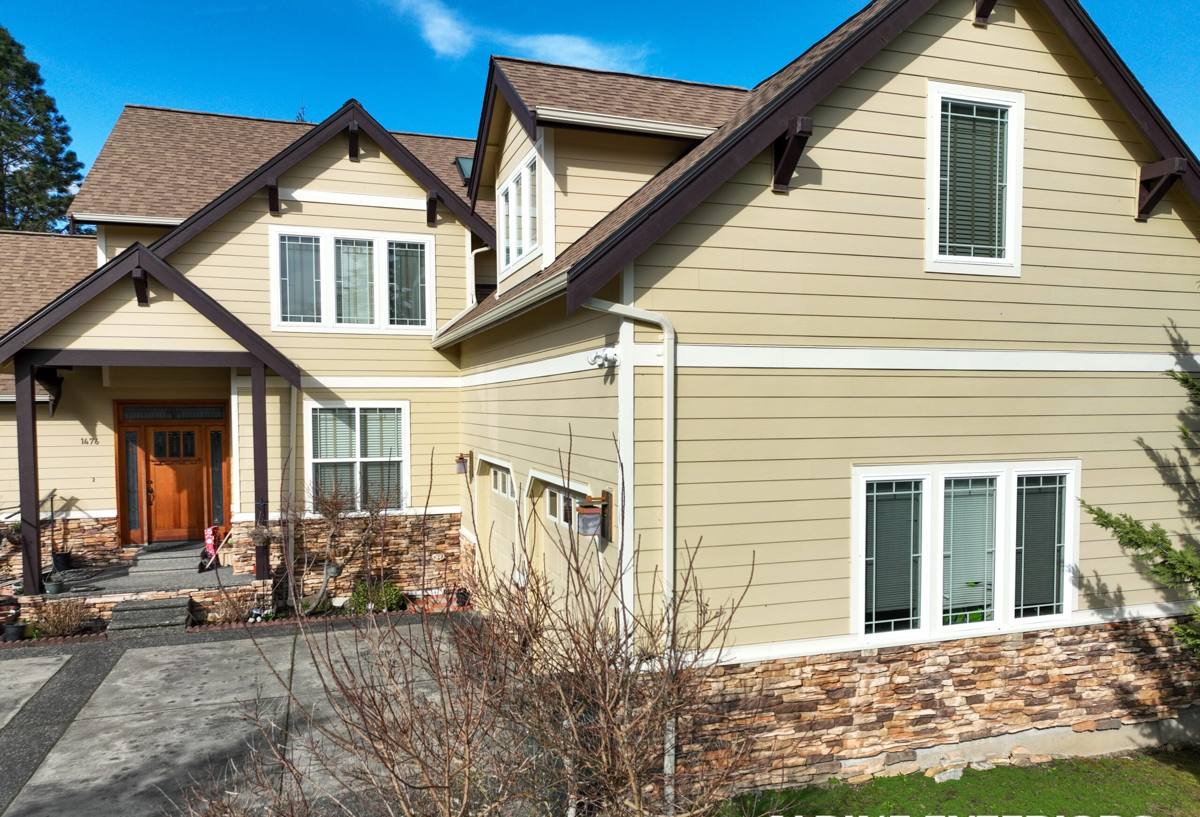
What Bellingham's Climate Does to a Roof Over Time
Whatcom County weather is hard on roofs in ways that aren't always obvious until something fails. Three factors matter most for a South Hill home:
- Salt air: Being close enough to the Salish Sea, homes here deal with airborne salt that accelerates corrosion on exposed metal — fasteners, flashing, vents, and gutter hardware age faster than they would inland.
- Driving rain: Bellingham doesn't just get rain, it gets wind-driven rain that pushes water sideways under shingles, into valleys, and around penetrations that a fair-weather install might get away with ignoring.
- A long moss season: Mild, wet conditions for much of the year create ideal moss and algae growth, especially on the shaded, north-facing, or tree-covered sections of a roof that South Hill's canopy produces in abundance.
None of these factors are dramatic on their own. The problem is they compound. A roof that's marginally under-ventilated, marginally under-flashed, and sitting under tree shade for most of the year will show real damage years before a roof built with all three in mind.
What a Correct Installation Actually Involves
"New roof" covers a lot of ground, and the difference between a roof that lasts and one that fails early almost always comes down to what's underneath the visible shingle or panel layer, not the material itself.
The Roof Deck
Before anything new goes down, the deck gets inspected and repaired. Soft spots, delaminated plywood, and old fastener holes get addressed now — not covered up and left for the next roofer to find in fifteen years.
Underlayment and Ice-and-Water Protection
Given how much wind-driven rain South Hill sees, we don't treat underlayment as a formality. Self-adhered ice-and-water membrane goes in at eaves, valleys, and around penetrations — the spots where wind-blown water is most likely to find a way in — with synthetic underlayment across the rest of the field for a water-resistant, breathable base layer.
Flashing
Flashing failures cause more roof leaks than shingle failures do. Every valley, chimney, skylight curb, and wall intersection gets new, correctly lapped flashing — not old flashing reused under new shingles, which is a shortcut that shows up as a leak within a few wet seasons.
Ventilation
A roof deck that can't breathe traps moisture, which shortens the life of the decking and the shingles from underneath. We check intake and exhaust balance and correct it as part of the install, not as an afterthought.
Fastening and Wind Resistance
Correct nailing pattern and fastener count matter more on exposed hillside sections of South Hill than they would on a sheltered lot in the valley. We install to the manufacturer's high-wind specification where the site calls for it.
Choosing a Roofing Material That Fits This Neighborhood
There's no single "best" roofing material — the right choice depends on the home's roofline, budget, tree cover, and how much upkeep the homeowner wants to take on. Here's how the common options stack up for a South Hill property specifically.
| Material | Moss & Algae Resistance | Wind-Driven Rain Performance | Maintenance | Typical Lifespan |
|---|---|---|---|---|
| Architectural asphalt shingle | Good with algae-resistant granules; still needs periodic moss removal under tree cover | Strong when installed with proper underlayment and flashing | Low to moderate | 25–30 years |
| Standing seam metal | Excellent — sheds moss and debris well due to smooth, steep-shed surface | Excellent; handles driving rain and wind uplift well | Low | 40–50+ years |
| Synthetic composite (shake/slate look) | Good; more resistant than wood, but still benefits from periodic cleaning | Strong | Low to moderate | 30–50 years |
| Cedar shake | Poor to fair without diligent upkeep — traditional wood shake is one of the highest-maintenance choices in a moss-prone, shaded climate | Moderate; performance depends heavily on installation quality and upkeep | High | 20–30 years with regular maintenance |
For heavily shaded South Hill lots under mature trees, we generally steer homeowners away from traditional cedar shake — not because it's a bad-looking product, but because the maintenance burden and moisture retention in a shaded, wet climate like this one make it a tough match unless someone is genuinely committed to regular upkeep. Asphalt and metal both give a better balance of performance and manageable maintenance for this specific setting.
Our Installation Process
- On-site assessment: We walk the roof, check the deck condition, look at ventilation, tree exposure, and existing moss or moisture damage, and take measurements.
- Written proposal: A clear scope of work and material recommendation based on your roofline, budget, and how much shade and rain exposure the roof actually gets.
- Tear-off and deck inspection: Old roofing is removed down to the deck so we can see and fix what's actually there, not guess at it.
- Deck repair as needed: Any soft, rotted, or delaminated sheathing is replaced before new material goes down.
- Underlayment, flashing, and ventilation install: The system that does the real work of keeping water out goes in first, correctly lapped and sealed.
- Finish material installation: Shingles, metal panels, or composite material go on to manufacturer specification, including fastening for local wind exposure.
- Final walkthrough: We review the completed roof with you, cover care and maintenance basics for our climate, and go over warranty coverage.
Ventilation and Moisture: The Part Homeowners Rarely See
A lot of roof problems in Bellingham don't start on top of the roof — they start underneath it. Poor attic ventilation traps warm, moist air against the underside of the deck, which speeds up rot and shortens shingle life from below, even while the surface still looks fine. On a shaded South Hill lot, that trapped moisture has fewer chances to dry out between rain events than it would on a sunnier, more exposed roof. Getting the intake-to-exhaust ratio right, and making sure insulation isn't blocking soffit vents, is one of the least visible but most important parts of a correct install.
Moss, Algae, and the Long Wet Season
Moss doesn't just look bad — it holds moisture against the roofing material, lifts shingle edges, and works its way into seams over time. On the shaded and north-facing sections that South Hill's tree canopy creates, moss pressure is higher than on a typical open-lot roof. A new installation is the right time to address this properly: algae-resistant shingle granules, zinc or copper strips at the ridge where appropriate, and a roofline design that sheds water and debris efficiently instead of trapping it. None of this eliminates the need for occasional cleaning, but it substantially reduces how often and how aggressively you'll need to deal with moss buildup.
What to Check Before You Hire a Roofer for a South Hill Home
- Do they carry current Washington State contractor licensing and insurance, and will they provide proof without hesitation?
- Do they inspect and repair the deck as part of the job, or just roof over whatever's underneath?
- Do they detail their underlayment, ice-and-water shield, and flashing plan in writing — not just the finish material?
- Do they check and correct attic ventilation as part of the scope?
- Do they have experience with hillside, tree-covered lots similar to South Hill, not just flat, open-lot installs?
- Is the manufacturer warranty tied to certified installation, and do they explain what that covers?
Permits and Local Requirements
Roof replacements in the City of Bellingham typically require a building permit, and work needs to meet current Washington State building and energy code, including ventilation and underlayment requirements. We handle the permitting process as part of the job so you're not left navigating it on your own, and we build to code as a baseline — not as an upsell.
Why Local Experience on South Hill Actually Matters
A crew that regularly works South Hill knows the difference between a roof that's shaded most of the day under tree cover and one that's fully exposed to wind coming off higher ground — and that difference changes real decisions, from ventilation balance to how aggressively to plan for moss. It also means we've seen how specific roof ages and styles common to this neighborhood tend to fail, so we're not guessing at what's under the old material before we start. That local pattern recognition, built from actually working these streets and hillside lots, is worth more than a generic install crew showing up once and moving on.
Get a Straight Answer on Your Roof
If your South Hill roof is showing granule loss, moss buildup, soft spots, or it's simply reaching the age where replacement is more sensible than another round of repairs, we're happy to take a look and give you a straightforward assessment — no pressure, no scare tactics. Fill out the form below for a free estimate, and we'll walk you through what your roof actually needs.