 Bellingham Exterior
 Siding Repair Built for the Puget Area's Climate
Homes along the Puget stretch near Bellingham take a different kind of beating than houses ten miles inland. You're close enough to the water to get salt-laden air working on fasteners and trim, close enough to the hills and tree cover to get long stretches of shade where moss and moisture never really dry out, and squarely in the path of the driving, wind-blown rain that rolls in off the Sound through fall and winter. None of that is dramatic on its own. It's cumulative. Siding damage out here rarely shows up as one big failure — it shows up as a soft spot behind a downspout, a discolored panel on the north wall, or a section of trim that's started to separate at the corner. By the time it's obvious from the driveway, the moisture has usually been working underneath for a while.
That's the case for repair over "wait and see." A siding repair done right in this climate isn't just patching what's visible — it's understanding why that spot failed in the first place and making sure the fix doesn't just fail again in two years.
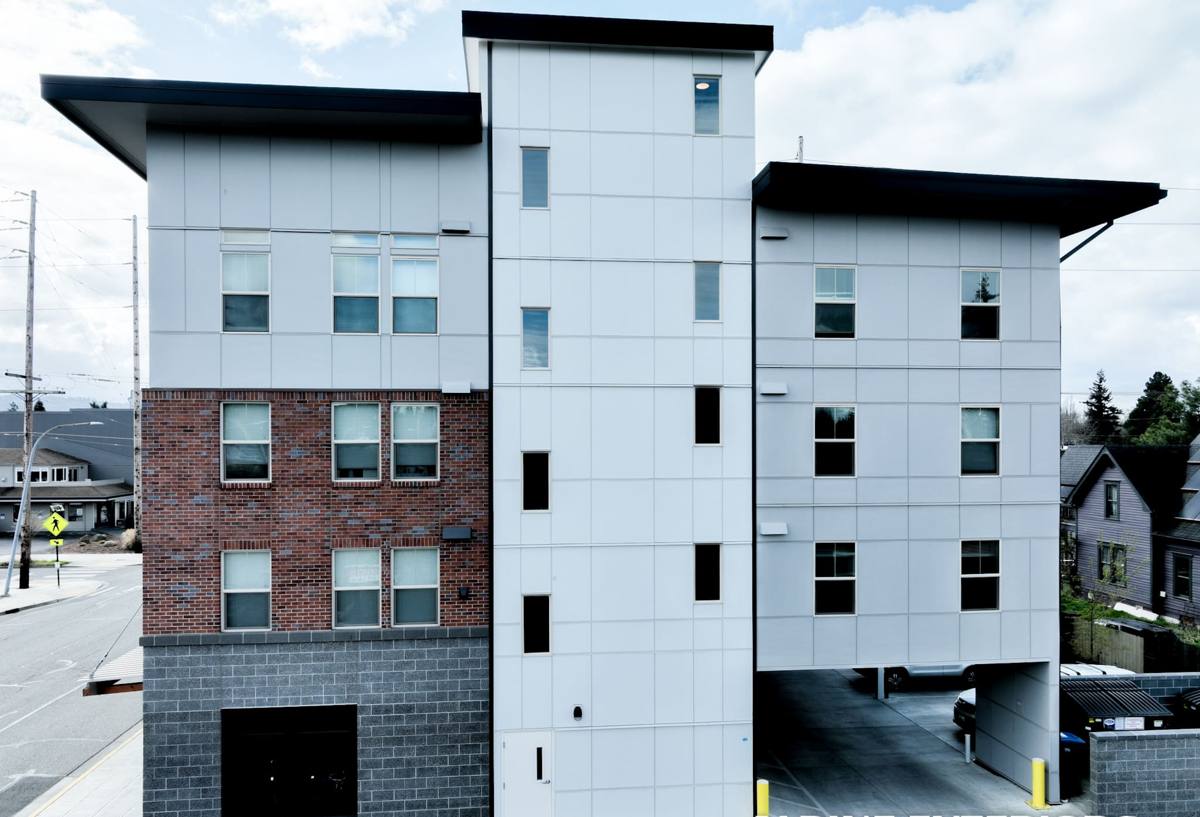
What Salt Air, Rain, and Moss Actually Do to Siding
Salt air
Whatcom County isn't a heavy industrial coastline, but proximity to the water still means airborne salt settles on exterior surfaces and accelerates corrosion on anything metal — nail heads, flashing, screws, trim fasteners. Once a fastener starts to corrode, it loses grip, siding starts to work loose at that point, and water gets a path in that wasn't there before.
Driving rain
Wind-driven rain doesn't just fall on siding, it pushes into every lap joint, seam, and butt joint that isn't sealed or flashed correctly. On a wall that gets weather from the prevailing direction, even a small install error — a missing kick-out flashing, a caulk joint that was never backed properly — turns into a chronic wet spot instead of a one-time nuisance.
Moss and prolonged moisture
Shaded walls and north-facing elevations near tree cover stay damp longer after every rain event, which is exactly what moss and mildew need to establish. Moss holds moisture against the siding surface far longer than open air would, and on top of that it works its way into seams and laps, prying them open over time. On wood-based or improperly sealed cement products, that sustained dampness is what leads to swelling, delamination, or soft, punky material underneath.
Signs Puget-Area Siding Needs Repair, Not Just Cleaning
- Panels or boards that feel soft, spongy, or give slightly when pressed near the bottom edge or around penetrations
- Dark streaking or persistent moss growth concentrated on one elevation, especially north- or shade-facing walls
- Nail heads or fastener points showing rust bleed or a slight raised "pop" in the siding
- Visible gaps opening up at butt joints, corners, or where siding meets trim, window casings, or the foundation
- Paint or factory finish that's peeling, bubbling, or chalking heavily in localized spots rather than evenly across the wall
- Warping, cupping, or a wavy look to individual boards when viewed at a low angle
- Interior signs — a musty smell, discoloration on interior drywall, or a slightly cool damp patch on an exterior-facing wall
Any one of these on its own might be minor. Two or three together, especially clustered around the same section of wall, usually means moisture has been getting behind the siding for a while and the repair needs to address the water path, not just the surface symptom.
What a Correct Repair Actually Involves
Diagnose before you touch anything
The first step isn't pulling the damaged board — it's figuring out why that board failed while the one next to it didn't. That means checking flashing at windows, doors, and roof-to-wall transitions, checking how the affected section drains, and, where there's any doubt, opening the area up enough to see whether the water barrier underneath is intact. Repairing the visible siding without fixing the underlying cause just buys a year or two before the same spot fails again.
Match the material and the reveal
Replacing a damaged section means matching board width, reveal (the exposed portion of each course), and texture so the repair doesn't stand out from across the street. On older homes this sometimes means the original product is discontinued, which is part of why we're honest with homeowners up front about whether a spot repair will blend in or whether a broader section should be replaced for a consistent look.
Get the water management right
Every repair is a chance to correct what caused the failure — proper house wrap or weather-resistant barrier lapped correctly, flashing installed above openings and at horizontal trim, and butt joints backed and sealed rather than just caulked over. In a climate that sees this much driving rain, water management details matter more than the siding material itself.
Refinish to match
Whether it's a factory-finished product or a site-painted section, the repair should be color- and sheen-matched so it reads as part of the wall, not a patch. On factory-finished fiber cement this is more straightforward since the finish is baked on and consistent from the manufacturer — one reason it holds up better on a repair than field-painted material that fades unevenly.
Repair or Replace? How We Help You Decide
| Factor | Repair likely makes sense | Replacement likely makes sense |
|---|---|---|
| Extent of damage | Isolated to one or two sections/elevations | Damage spread across multiple walls or recurring in the same spots |
| Underlying material condition | Rest of the siding is sound, just aged in appearance | Widespread softness, delamination, or warping |
| Cause of failure | Isolated flashing or fastener issue, now correctable | Systemic water intrusion from the original install |
| Product on the house | Fiber cement or another durable material still available to match | Discontinued product, or original material not suited to this climate |
| Age of the siding | Well within expected service life | Nearing or past the end of its realistic lifespan |
We'll walk the exterior with you, section by section, and give you a straight answer on which category your home falls into. A lot of Puget-area homes we look at genuinely only need targeted repair — we're not going to sell a full re-side when a corrected repair will hold up fine.
Our Process for Siding Repair in Puget
1. On-site inspection
We walk every elevation, not just the spot you called about, since salt air and shade-driven moisture problems often show up in more than one place at once.
2. Diagnosis and a clear scope
You get a plain-English explanation of what failed, why, and what it'll take to fix it correctly — including whether we recommend repair or a larger replacement, and why.
3. Repair with water management corrected
We don't just swap boards. Flashing, house wrap, and joint detailing get corrected as part of the repair so the same failure doesn't recur.
4. Match and finish
Replacement sections are matched for reveal, texture, and color as closely as the existing product allows, so the repair blends into the wall.
5. Walkthrough
We review the completed work with you before we consider the job done.
Why We Only Install James Hardie Fiber Cement
When a repair calls for new material, or when a homeowner asks us to look at a full re-side instead, we only work with James Hardie fiber cement. It's non-combustible, it's engineered in HZ product lines built for wet, marine-influenced climates like ours, and it carries a factory-applied ColorPlus finish that resists the fading and chalking that field-painted siding struggles with here — particularly on sun- and salt-exposed walls. We've made a professional call not to install vinyl, LP SmartSide, primed spruce, cedar, or other fiber cement brands, because in a climate defined by driving rain and prolonged dampness, the moisture behavior and long-term maintenance burden of those products don't hold up the same way. That's not a knock on every use case for those materials — it's why, for Puget-area homes, we point people toward Hardie and stand behind it.
Why It Matters to Hire a Crew That Already Works This Area
A repair crew that works Puget and the surrounding Bellingham area regularly already knows which elevations tend to hold moisture, how far the salt air travels inland from the water, and what moss buildup looks like before it becomes a structural issue rather than a cosmetic one. That local pattern recognition is the difference between a repair that just covers the damage and one that actually stops it from coming back. It also means faster, more accurate estimates, because we're not guessing at how Whatcom County weather behaves — we're working from what we see on homes in this area every season.
Get a Straight Answer on Your Siding
If you're seeing soft spots, moss buildup, or gaps opening up on your Puget-area home, it's worth getting a professional look before it turns into a bigger repair. We'll walk the exterior, tell you honestly whether it's a targeted fix or something larger, and give you a free, no-pressure estimate — use the form below to get started.