 Bellingham Exterior
 Roof Repair Built for Happy Valley's Conditions
Happy Valley sits close enough to Bellingham Bay and the surrounding marine air that its roofs take a specific kind of beating: salt-laden moisture, driving rain off the water, and a moss season that can run eight months or longer in a shaded, tree-lined neighborhood like this one. Add in the mature tree canopy common to the area's older residential streets, and you get roofs that hold organic debris, stay damp longer after storms, and develop moss and lichen faster than roofs in drier, more exposed parts of Whatcom County. Roof repair here isn't just patching a leak — it's addressing why that leak happened in the first place, which almost always traces back to moisture that had time to work.
We work on homes throughout this part of Bellingham regularly, which means we already know the roof pitches, the common builder details from different construction eras, and the specific trouble spots — valleys, chimney flashing, low-slope additions — that tend to fail first under sustained Pacific Northwest rain.
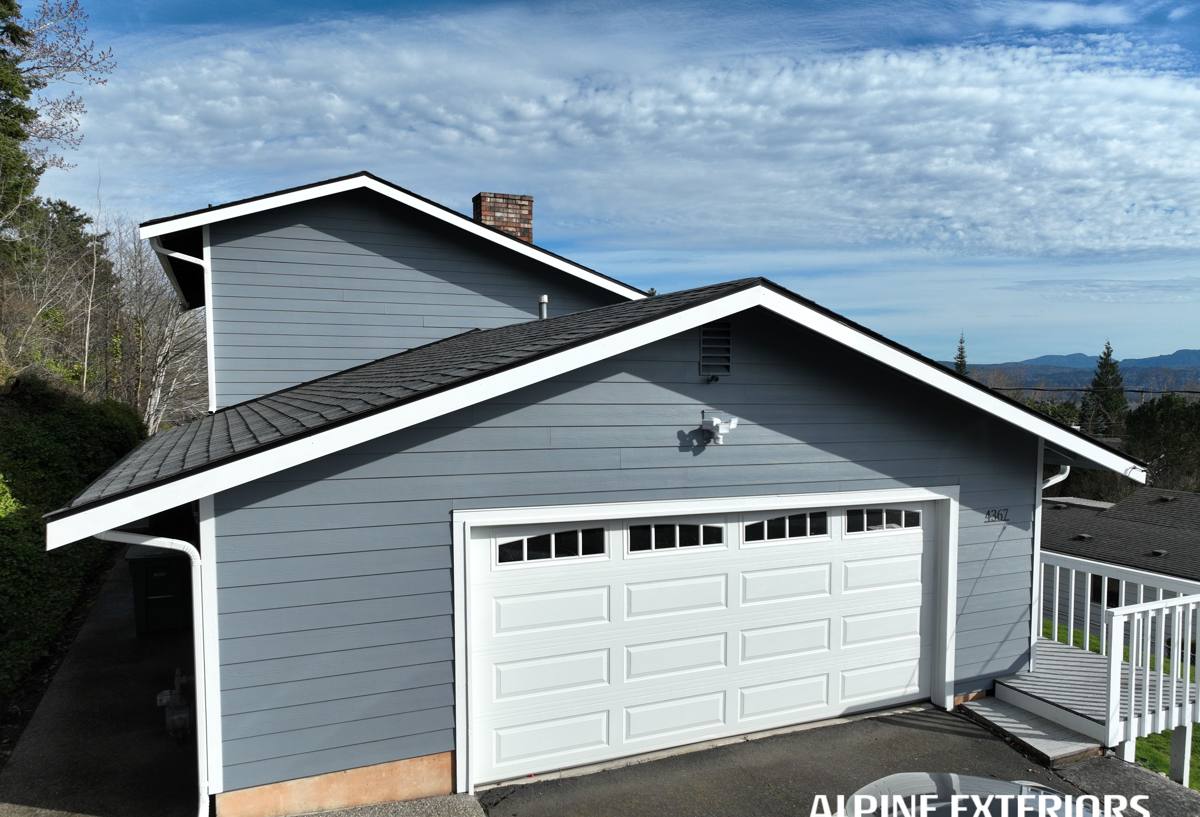
Why Happy Valley Roofs Fail Differently
Salt Air and Metal Fatigue
Proximity to the bay means airborne salt settles on roofing materials and, more importantly, on exposed metal — flashing, fasteners, vent caps, and gutter hardware. Salt accelerates corrosion on unprotected or lower-grade metal, which is often the first thing to fail on an otherwise sound roof. A rusted-through flashing seam or a corroded fastener head is a small problem that, left alone, becomes a rotted deck.
Moss as a Moisture Trap, Not Just an Eyesore
Moss doesn't just look bad. Once established, it holds water directly against the roofing surface around the clock, which keeps shingles or shakes wet long after a storm has passed. That sustained moisture breaks down asphalt shingle granules faster, softens wood shakes, and — on any roof with even minor flashing gaps — gives water a direct path underneath the roofing material rather than off of it.
Driving Rain and Wind-Driven Water
Storms coming off the water often bring rain at an angle, not straight down. Wind-driven rain finds weaknesses that vertical rain never would — under-lapped shingle edges, marginal flashing laps, and vents or penetrations that were sealed adequately for calm rain but not for sideways rain. This is a big reason we see leaks in Happy Valley homes that "should" be watertight by the book but aren't watertight in practice.
What a Correct Roof Repair Actually Involves
A roof repair that holds up here has to do more than stop the drip you can see. Our process on every repair call includes:
- Locating the actual entry point, which is frequently several feet from where the interior stain shows up, since water travels along the deck or rafters before it drips
- Checking the full roofing system in that area — underlayment, decking, flashing, and fasteners — not just the surface layer
- Assessing moss and organic growth in the surrounding field, since a repair next to an active moss mat will fail again quickly if the moss isn't addressed
- Inspecting deck condition for soft spots or rot before any new material goes down over it
- Matching repair materials to the existing roof as closely as possible so the patch doesn't become its own weak point
- Confirming proper water shedding — laps, step flashing, and counterflashing installed in the correct order and direction
Skipping any of these steps is how a "repaired" roof leaks again within a year, usually in a slightly different spot.
Common Repair Scenarios We See in This Neighborhood
Valley and Flashing Leaks
Roof valleys collect the most water and the most debris, which makes them the most common failure point on Happy Valley roofs, especially under tree cover. Chimney and skylight flashing is the next most common culprit — sealant-only fixes from prior repairs tend to fail within a few years once UV exposure and temperature swings crack the caulk.
Moss-Related Shingle Damage
Roofs that have gone a few years without moss treatment often need more than a cleaning. Where moss has lifted shingle edges or where granule loss has exposed the asphalt mat underneath, those individual shingles need replacement, not just moss removal.
Gutter and Edge Rot
Fascia boards and roof edges near clogged or undersized gutters take on chronic moisture, especially where debris from overhanging trees accumulates. This shows up as soft or discolored wood along the eaves and is a repair that's cheap to fix early and expensive to ignore.
Ventilation-Related Moisture
Attics that don't vent properly trap warm, moist air against the underside of the roof deck. In a climate this damp, that can cause deck deterioration and even interior mold that has nothing to do with an actual leak — it gets misdiagnosed as a roof leak when the real issue is airflow.
Repair Cost Factors
Every roof and every leak is different, so we don't quote a number without seeing the roof, but these are the factors that most often move a repair estimate up or down:
| Factor | Why It Matters |
|---|---|
| Size and location of damage | A single flashing repair is far less involved than replacing a section of deck and multiple shingle courses |
| Roof material type | Composition shingle, wood shake, and metal each require different repair techniques and materials |
| Deck condition underneath | Rotted decking must be replaced before new roofing goes down, which adds material and labor |
| Roof pitch and access | Steeper roofs and limited access (tight lots, tree cover) take longer and require more safety setup |
| Age and match of existing material | Older or discontinued shingle lines can be harder to match, affecting both cost and appearance |
| Moss/debris removal needed | Heavily mossed roofs often need cleaning before the repair area can even be properly assessed |
Our Process for Happy Valley Roof Repairs
- Inspection. We get on the roof (or use a safe vantage point when conditions don't allow foot traffic) and trace the actual source of the problem, not just the visible symptom.
- Honest assessment. We tell you what's actually needed — a targeted repair, a larger section replacement, or in some cases advice that full replacement is a better long-term value than repeated repairs.
- Written scope and estimate. You get a clear explanation of what we found and what the repair involves before any work starts.
- Repair work. Matched materials, correct flashing sequencing, and attention to the surrounding roof so the fix doesn't just relocate the problem.
- Follow-up guidance. If moss, ventilation, or gutter issues contributed to the failure, we'll flag them so you can decide whether to address them now or on your own timeline.
Preventing the Next Leak
A repair solves today's leak. Keeping the next one from happening is mostly about managing moisture over time, which matters more in Bellingham's climate than in drier regions. A simple homeowner checklist for a Happy Valley roof:
- Clean gutters at least twice a year, more often if you're under mature trees
- Have moss treated or removed before it establishes thick mats, not after
- Trim back branches that overhang the roofline to reduce debris and shade that keeps the roof damp
- Check attic ventilation if you notice ice damming in winter or excess heat buildup in summer
- Have flashing around chimneys, skylights, and vents inspected every few years, since sealant-based repairs degrade with age
- Address small leaks immediately — a stain the size of a dinner plate today can mean rotted decking within a couple of seasons in this climate
Why Local Experience on This Roof Type Matters
A roofer who mostly works drier inland climates will sometimes underestimate how much moss and sustained moisture matter here, or specify a repair approach that works fine in a low-humidity region but doesn't account for Whatcom County's rain totals and marine exposure. We work on homes throughout Bellingham and Happy Valley regularly enough to know which roofing eras and details are common in this area, which materials hold up against salt air and moss without excessive maintenance, and which shortcuts — sealant-only flashing fixes, ignoring soft decking, skipping moss removal before a patch — cause repeat callbacks. That local pattern recognition is often the difference between a repair that lasts and one that reappears next winter.
When Repair Makes Sense vs. When It Doesn't
Not every roof problem should be repaired piecemeal. If a roof has multiple active leak points, widespread moss damage, or is nearing the end of its material's realistic service life, repeated small repairs can end up costing more over a few years than a planned replacement would. Part of an honest inspection is telling you where that line is for your specific roof, rather than defaulting to "repair" because it's the smaller job today. We'll always give you our honest read on which option actually saves you money over time.
If you're dealing with a leak, a stain on a ceiling, or visible moss buildup on a Happy Valley roof, we're glad to take a look and give you a straightforward, no-pressure estimate. Use the form below to get started.