 Bellingham Exterior
 Composite Decking Built for Lynden's Climate, Not Just for Looks
Lynden sits inland from Bellingham Bay, but it doesn't escape Whatcom County's defining weather pattern: long stretches of damp, gray days, driving rain off the Pacific, and a moss season that can run from October well into April. Add in the region's marine-influenced air moving up the Nooksack valley, and you've got a climate that's tough on any exterior surface that touches wood, fasteners, or ground contact. A deck in Lynden isn't just a place to put a barbecue — it's a structure that has to shed water fast, resist organic growth, and stay dimensionally stable through freeze-thaw swings and soggy shoulder seasons.
Composite decking has become the go-to answer for homeowners here who are tired of annual staining, splinters, and boards that gray and cup within a few seasons. But "composite decking" isn't one product — it's a category with real differences in core construction, capping, and how well a given board actually performs in a wet, moss-prone climate like ours. This page covers what a correctly built composite deck looks like specifically for a Lynden property, and what our crew does differently because we already know this climate.
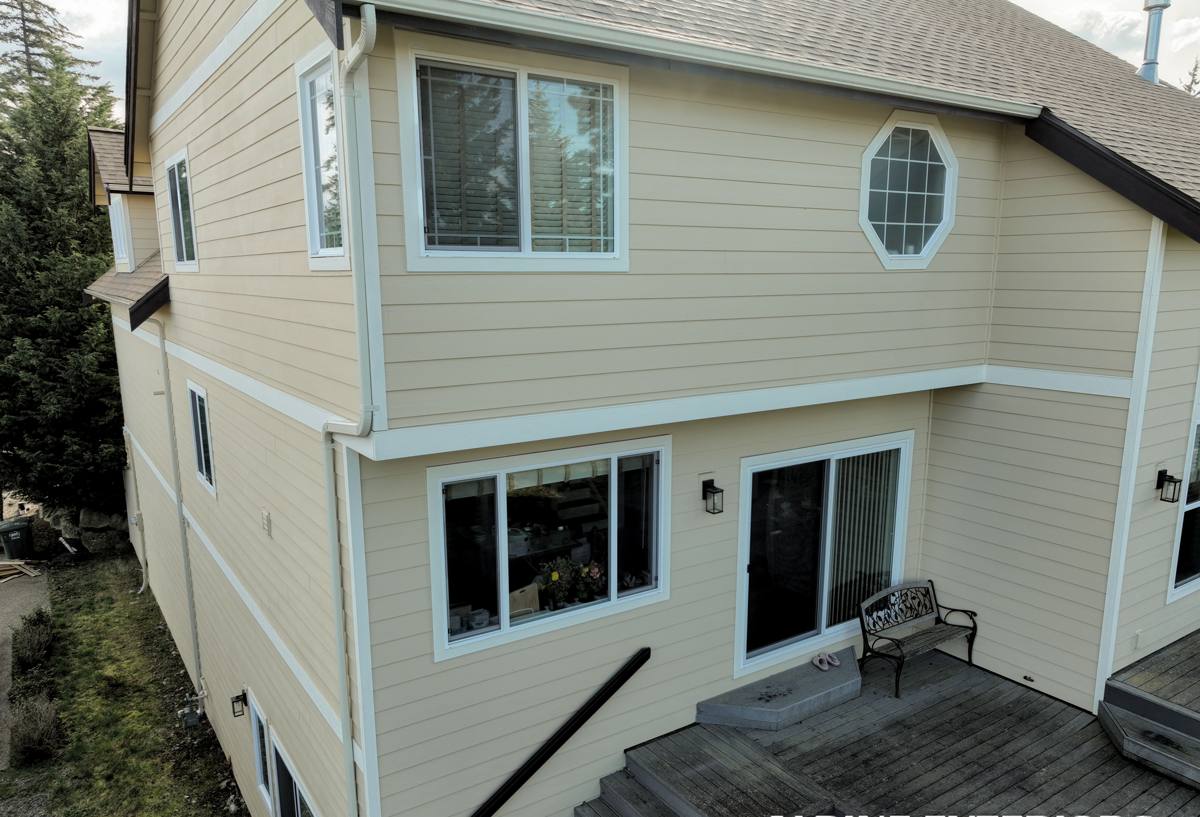
Why Lynden's Weather Is Harder on Decks Than It Looks
On paper, Lynden doesn't get hit with hurricanes or heavy snow loads most years. The damage here is slower and less dramatic — which is exactly why it gets ignored until it's expensive to fix.
Moisture That Doesn't Let Up
Whatcom County gets a steady drip of rain rather than short, intense storms for much of the fall and winter. That means deck surfaces, especially in shaded yards or under overhangs, can stay damp for days at a time. Wood decking absorbs that moisture, swells, and eventually checks or rots at the joints. Lower-grade composite boards with an uncapped or partially exposed core can wick moisture too, especially at cut ends.
Moss and Algae Season
A shaded, north-facing deck in this region can develop a moss or algae film within a single wet season if the surface texture and drainage aren't right. Moss isn't just cosmetic — it holds moisture against the board and makes the surface slick and genuinely dangerous on stairs and ramps.
Freeze-Thaw and Temperature Swings
Lynden sees enough cold snaps each winter to freeze standing moisture in ledger connections, fastener pockets, and gaps between boards. Materials that don't expand and contract predictably will eventually loosen fasteners, buckle, or crack at stress points.
UV Exposure in the Open Months
Summers here are milder than most of the country, but on open, south-facing decks the sun still fades and dries out unprotected material over a few years. A deck built for this area needs to handle both extremes — soggy winters and drying summer sun — without falling apart in either direction.
What a Correct Composite Deck Build Involves
The decking boards get most of the attention, but the boards are only as good as everything underneath them. Most deck failures we get called out for in this area aren't board failures — they're structural, drainage, or fastening mistakes that show up years later as soft spots, rot at the ledger, or boards that have shifted.
Substructure First
Joists, beams, and posts should be rated for ground contact where applicable and properly flashed at any point they meet the house. In a climate this wet, a ledger board that isn't flashed correctly is one of the most common sources of hidden rot — you won't see it from the deck surface, you'll see it years later when the house band board is compromised.
Spacing and Airflow
Composite boards need consistent gapping for water drainage and for the material's normal thermal expansion. Too tight, and boards can buckle or cup during a warm stretch after a wet winter. Too loose, and you get an uneven, unfinished-looking surface. Airflow underneath the deck matters too — a low-clearance deck over damp soil with no ventilation is a setup for moisture buildup that shortens the life of everything above it, including composite boards.
Fastening Method
Hidden fastener systems keep the surface clean and eliminate the screw-head corrosion and water-pooling points you get with face-screwed boards. In a high-moisture climate, fewer surface penetrations means fewer places for water to sit and work its way into the board.
Board Selection for Moss Resistance
Not every composite board handles algae and moss the same way. Boards with a fully capped surface (as opposed to a capped top only, or an uncapped budget board) resist moisture intrusion far better and are easier to keep clean. Surface texture matters too — some heavily embossed wood-grain patterns actually trap more moisture and organic debris than a cleaner, moderately textured surface.
Composite vs. Other Decking Options for This Climate
| Material | Moisture/moss performance here | Maintenance | Typical lifespan |
|---|---|---|---|
| Pressure-treated wood | Absorbs moisture, prone to splintering and rot at fasteners over time | Annual cleaning, periodic staining/sealing | 10–15 years before major repair or replacement |
| Cedar | Natural rot resistance but still absorbs moisture; grays without upkeep | Regular sealing to hold color and resist moisture | 15–20 years with consistent maintenance |
| Budget/uncapped composite | Prone to moisture wicking at cut ends and fastener holes | Low, but surface can stain and support moss growth | 15–20 years, shorter if drainage/ventilation is poor |
| Fully capped composite | Best resistance to moisture intrusion and organic growth in this climate | Occasional rinse, no staining or sealing | 25–30+ years with manufacturer warranty backing |
The upfront cost gap between a budget composite and a fully capped composite board is real, but in a climate that stays wet as long as ours does, that gap is usually where the long-term maintenance savings live. We'll walk you through the actual price difference for your project rather than quoting a generic range that doesn't reflect your deck's size and layout.
Our Process for a Lynden Composite Deck
- On-site assessment. We look at drainage, sun/shade exposure, existing structure condition, and how the deck ties into the house — all of which affect material choice and detailing.
- Structural evaluation. Any existing substructure gets checked for rot, ledger flashing condition, and code-compliant footings before we build on top of it or reuse it.
- Material selection. We go over board options, capping levels, and color/texture choices with moss resistance and drainage in mind for your specific yard conditions, not a one-size-fits-all recommendation.
- Framing and flashing. New or reinforced substructure goes in first, with proper ledger flashing and ventilation clearance underneath the deck surface.
- Decking installation. Boards go down with consistent, code-correct gapping and a hidden fastener system where the product allows it.
- Finish details. Fascia, stair treads, railing, and any trim work get finished to match, with attention to any spot where two materials meet — those transition points are where water problems usually start.
- Final walkthrough. We go over care basics with you — what routine cleaning looks like, what to watch for near planters or shaded corners, and warranty coverage on both material and labor.
Signs Your Current Deck Needs Attention
- Boards that feel soft, spongy, or springy underfoot, especially near the house
- Persistent green or black film that returns quickly after cleaning
- Visible gaps or movement where the deck meets the house ledger
- Fasteners backing out, rusting, or leaving dark streaks on the boards
- Standing water that doesn't drain within a few hours after rain stops
- Cupping, cracking, or fading concentrated on the sunniest or shadiest sections
- Railings or stair stringers that feel loose or flex under normal weight
Any one of these on its own might just be routine wear. Several at once, especially near the ledger or support posts, usually means it's worth a professional look before it becomes a safety issue rather than a repair.
Maintaining a Composite Deck in Whatcom County
One of the real advantages of composite decking in this climate is how little upkeep it needs compared to wood — but "low maintenance" doesn't mean "no maintenance." A seasonal rinse with a garden hose and a soft-bristle brush keeps organic buildup from getting a foothold, especially in shaded corners where moss is most likely to start. Avoid pressure washers on the highest settings directly against the board surface, since that can damage the cap layer on some products over time. Keeping gutters and downspouts clear so runoff isn't dumping directly onto the deck surface also goes a long way toward extending its life here.
If you have planters or furniture that sit directly on the deck for months at a time, moving them periodically lets the surface dry evenly and prevents the kind of trapped moisture that invites moss even on a good board.
Why a Locally Experienced Crew Matters for This Job
Composite decking installation looks straightforward in a how-to video, but the details that actually matter — ledger flashing that holds up to our rain patterns, gap spacing that accounts for real seasonal expansion, ventilation that prevents moisture buildup underneath — are the details that separate a deck that lasts 25 years from one that needs board replacement in 8. A crew that works Lynden and the surrounding Whatcom County area regularly has already seen how different board types and details hold up locally, rather than guessing based on a manufacturer's national spec sheet written for a drier climate.
We also know the permitting and inspection expectations for deck work in this area, so structural changes and railing height requirements get handled correctly the first time, without delays that come from missing a local requirement.
Get a Straightforward Estimate
If you're planning a new composite deck or replacing one that's past its prime, we're happy to come take a look, talk through material options that fit your yard's sun and shade conditions, and give you a clear, no-pressure estimate. Use the form below to get started.