 Bellingham Exterior
 Why Ferndale Decks Wear Out Faster Than You'd Expect
Ferndale sits close enough to the water and open farmland that decks here take a different kind of beating than decks twenty miles inland. Salt-tinged air off Bellingham Bay and the Strait works into fasteners and metal connectors year-round. Driving rain off Whatcom County's marine storms finds every seam, gap, and end-grain cut in a wood deck. And the long, damp shoulder seasons — fall through spring — grow moss and algae on any surface that doesn't get enough sun or airflow to dry out between rains. None of this is dramatic on its own. It's cumulative. A deck that would last two decades in a dry inland climate can start showing structural problems in half that time here if it wasn't built or maintained for these conditions.
When we replace a deck in Ferndale, we're not just swapping old boards for new ones. We're correcting for the specific ways this climate attacks a structure — moisture at the ledger board, corrosion at hidden fasteners, rot starting from the inside of a joist rather than the surface. A deck that looks fine from the yard can be failing where you can't see it, and that's the part a replacement has to get right.
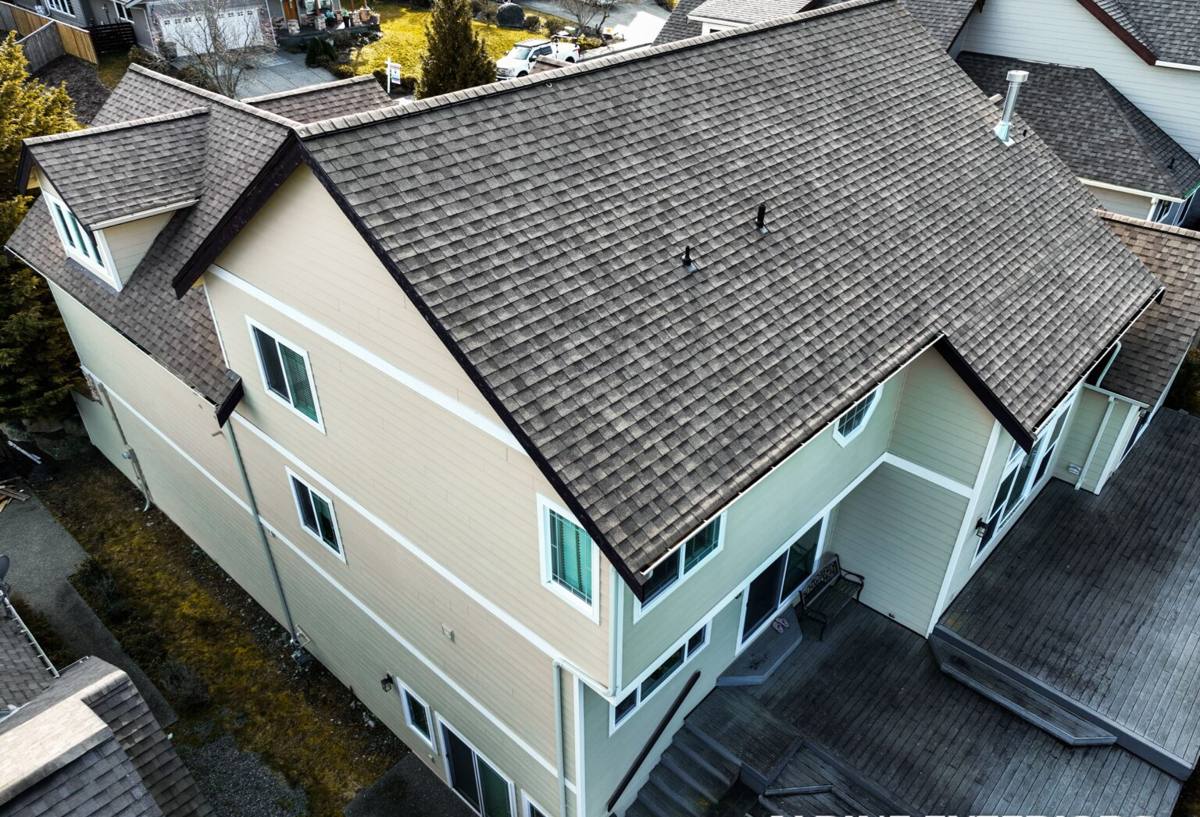
What Salt Air and Moss Season Actually Do to a Deck
Salt Air and Metal Fatigue
Every deck depends on metal to hold it together — joist hangers, structural screws, post bases, ledger flashing. Salt-laden air accelerates corrosion on anything that isn't rated for it. Standard electro-galvanized hardware can start pitting and weakening years before the wood around it shows any visible wear. Once a hanger or bolt corrodes enough to lose grip strength, the connection it's holding — often a joist to the ledger, or a post to its footing — is compromised even though the deck may still look sound.
Driving Rain and Hidden Rot
Rain that comes in at an angle, which is common with Pacific storms moving through Whatcom County, pushes water into places a straight-down rain never would: under top rails, behind fascia boards, into the joint where a ledger meets the house. That's where rot usually starts on an older deck — not on the open decking surface where you'd notice it, but in framing members tucked against the house or under low-clearance areas where sun and wind can't dry things out.
Moss, Algae, and the Slip Hazard Nobody Talks About
Ferndale's long damp season means moss and algae growth on decking is less a cosmetic issue and more a real fall risk, especially on stairs and any north-facing or shaded section of the deck. Moss also holds moisture against the board surface long after the rest of the deck has dried, which speeds up wood decay and finish breakdown in exactly the spots where moss likes to grow.
Signs a Ferndale Deck Needs Replacement, Not Repair
Not every tired-looking deck needs a full teardown. But there's a point where patching individual boards stops making sense and a full replacement becomes the honest recommendation. We look for:
- Soft or spongy spots in the decking, especially near the house or in shaded areas
- Visible corrosion, rust staining, or loose hardware at joist hangers and post connections
- A ledger board that's separated even slightly from the house, or shows water staining behind it
- Posts or footings that have shifted, settled, or show rot at ground contact
- Persistent moss or algae growth that keeps returning within weeks of cleaning
- Railings that flex or feel less rigid than they should under normal pressure
- A deck original to a home built more than 20-25 years ago, where codes and materials have since improved significantly
If it's mostly surface wear on an otherwise sound structure, resurfacing or targeted repair may be the right call, and we'll say so. Replacement makes sense when the framing, connections, or ledger are compromised — patching those issues just delays a bigger problem.
What a Correct Deck Replacement Looks Like Here
Starting With the Ledger and Framing
The ledger board — where the deck attaches to the house — is the single most important connection on any deck, and it's the part most likely to fail quietly in a wet climate. A correct replacement means proper flashing behind and above the ledger so water is directed away from the house rather than trapped against it, along with structural fasteners sized and spaced to code, not just whatever was on hand.
Hardware Rated for Coastal-Adjacent Conditions
Given Ferndale's proximity to salt air, we don't treat hardware selection as an afterthought. Stainless steel or heavy-duty coated fasteners and connectors cost more up front than standard galvanized hardware, but they hold their strength far longer in this environment. This is a case where the cheaper option now becomes the expensive problem in ten years.
Drainage and Airflow by Design
A deck that dries out fully between rains ages slower than one that stays damp. That means proper joist spacing and gapping between boards, keeping vegetation and debris from choking airflow underneath, and grading the ground below so water doesn't pool against posts or footings. These are decisions made during the build, not fixes added after the fact.
Material Choice: Wood vs. Composite
Both wood and composite decking can perform well in Whatcom County if they're chosen and installed correctly. Pressure-treated or naturally rot-resistant wood is more affordable and repairable board-by-board, but it needs regular sealing or staining to keep moisture out — skip that maintenance in this climate and it shows fast. Composite decking costs more initially and needs far less upkeep, but it depends entirely on correct installation — proper spacing for expansion, ventilated substructure, and manufacturer-specified fasteners — because a composite deck installed wrong traps moisture just as badly as an unmaintained wood one.
| Factor | Wood Decking | Composite Decking |
|---|---|---|
| Upfront cost | Lower | Higher |
| Maintenance | Annual sealing/staining recommended | Periodic cleaning, no sealing needed |
| Moss resistance | Depends on finish upkeep | Generally better if properly ventilated |
| Repairability | Individual boards easy to replace | Board matching can be harder over time |
| Lifespan in this climate | 15-25 years with upkeep | 25-30+ years with correct install |
Our Replacement Process
We keep the process straightforward so you know what to expect and when:
- On-site assessment — we inspect the existing deck's framing, ledger, footings, and hardware, not just the surface boards, to determine what's actually driving the need for replacement.
- Honest scope and estimate — you get a clear breakdown of what's being replaced and why, including material options suited to your budget and how much maintenance you're willing to take on long-term.
- Permitting — most deck replacements in Whatcom County require a permit, particularly for structural work tied to the house; we handle that process rather than leaving it on you.
- Demolition and disposal — old decking, framing, and hardware are removed and hauled off, with attention to protecting your landscaping and the area around the foundation.
- Rebuild — new ledger flashing, framing, hardware, and decking installed to current code, with drainage and airflow built into the layout from the start.
- Final walkthrough — we go over the finished deck with you, including what maintenance (if any) it needs going forward.
Why a Crew That Already Works Ferndale Matters
Deck-building knowledge that works in a dry climate doesn't automatically transfer here. A crew that regularly works Ferndale and the surrounding Bellingham area already knows which hardware holds up against salt air, how much slope and gapping actually keeps water moving in a Whatcom County winter, and where moss tends to establish itself on a north-facing deck versus a south-facing one. That's not something you learn from a spec sheet — it's something you learn from callbacks and from seeing how decks in this specific area age over years.
There's also a practical side to hiring local: a crew based near Bellingham can get to your property quickly for the initial assessment, follow up promptly if anything needs attention after the build, and is around long-term if you ever have a question about how the deck is holding up.
Maintaining Your New Deck in This Climate
A correctly built deck still needs some seasonal attention to get its full lifespan out of it, especially with Ferndale's moss season:
- Sweep debris and standing leaves off the deck surface regularly in fall, when moss and algae growth accelerates
- Keep gutters and downspouts near the deck clear so runoff isn't dumping extra water onto or near it
- Trim back vegetation that's shading the deck or blocking airflow underneath
- For wood decks, plan on resealing or staining on the schedule your product calls for — don't stretch it just because the deck still looks okay
- Do a quick check each spring of railings, stair connections, and any visible hardware for looseness or corrosion
- Clean moss and algae promptly rather than letting it establish, especially on stairs and shaded sections
Get a Free, No-Pressure Estimate
If your Ferndale deck is showing its age — soft spots, corroding hardware, moss that keeps coming back, or a ledger that just doesn't look right — it's worth having someone look at what's actually going on underneath before you decide between repair and replacement. We'll walk the deck with you, tell you honestly what we find, and put together a clear estimate with no pressure to move forward. Fill out the form below to get started.