 Bellingham Exterior
 Windows Built for Barkley's Weather, Not Just Its Views
Barkley sits close enough to Bellingham Bay and the surrounding wetlands that its homes take on a specific mix of weather stress: salt-tinged air drifting in off the water, wind-driven rain that finds its way sideways under eaves, and a moss season that seems to stretch longer every year. None of that is dramatic on its own, but together it adds up to steady, cumulative wear on window frames, seals, and the wall assemblies around them. A window that was installed correctly ten or fifteen years ago in a drier climate might be showing real problems here by now — fogged glass, soft trim, drafts that weren't there when the house was new.
We install windows throughout Bellingham and Whatcom County, and Barkley's mix of newer construction and established homes gives us a good look at how different eras of building handle this climate. Some of it holds up well. Some of it doesn't, and it's usually not the window itself that failed — it's how it was flashed, sealed, or fitted into the wall.
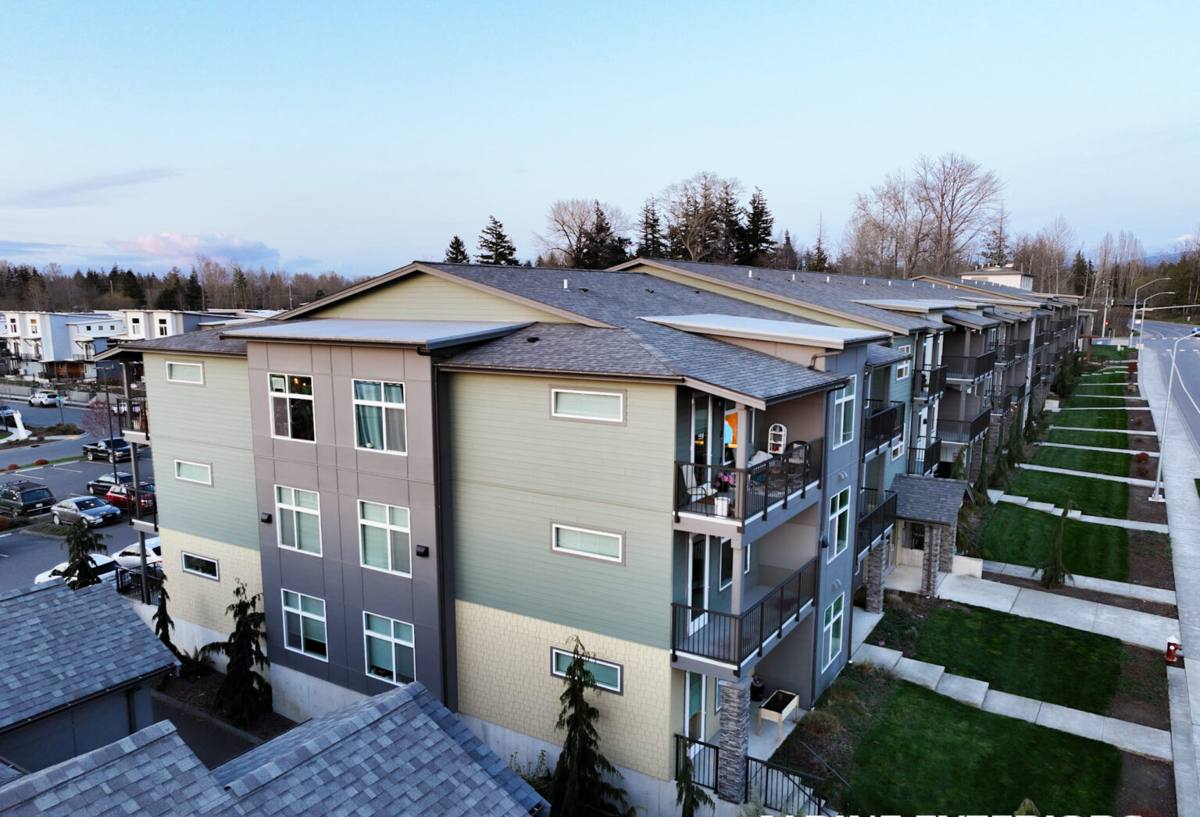
What Barkley's Climate Actually Does to a Window
It helps to be specific about the mechanisms, because "coastal weather" isn't just a mood — it's a set of physical stresses with predictable failure points.
Salt air and metal fatigue
Proximity to Bellingham Bay means a low but constant load of salt-laden moisture in the air. Over years, this accelerates corrosion on window hardware — hinges, locks, and especially aluminum components that aren't rated for coastal exposure. Vinyl and fiberglass frames resist this better than bare aluminum, which is one reason we steer most Barkley homeowners away from uncoated aluminum sashes unless there's a specific architectural reason to use them.
Driving rain and wind-loaded water
Bellingham doesn't get the heaviest rainfall in the state, but a good share of it arrives horizontally, pushed by wind off the water. That matters because a window only has to shed water well when it's falling straight down; wind-driven rain tests the flashing, the sill pan, and the seal between the window unit and the rough opening. This is the single most common source of hidden window failures we find — not bad glass, but water finding a path around the frame and into the wall cavity where nobody sees it until there's a stain or soft spot.
Moss, shade, and prolonged dampness
Barkley has plenty of mature trees and shaded lots, which is part of its appeal, but shade also means surfaces stay damp longer after every rain. Moss and algae take hold on north-facing trim, sills, and the caulk lines around windows faster here than on a sun-exposed wall. Once organic growth gets a foothold in a caulk joint or a wood sill, it holds moisture against the material and speeds up rot underneath, even if the surface still looks okay.
Signs a Barkley Home Needs New Windows
Most homeowners don't call us because they woke up wanting new windows — they call because something specific started bothering them. Here's what we typically hear, and what it usually means.
- Fogging or a permanent haze between panes — the seal on a double-pane unit has failed and the gas fill has escaped. This can't be fixed by cleaning; the sealed unit (or the whole window) needs replacing.
- Drafts near the frame, not just the glass — usually a sign the perimeter seal or flashing has degraded, letting air (and water) bypass the window entirely.
- Soft or spongy trim and sills — a strong indicator of wood rot from trapped moisture, often worse than it looks from outside.
- Windows that are hard to open, close, or lock — frames can swell, warp, or settle out of square as moisture cycles through the material over years.
- Visible mold or moss creeping onto interior sills — a sign that moisture is getting well past where it should stop.
- Noticeably higher heating bills without other explanation — aging windows lose efficiency gradually, and it's easy to miss until you compare bills year over year.
What a Correct Window Installation Involves
The window unit itself matters, but in this climate, the installation detail matters more. We treat every replacement as an opportunity to fix whatever water-management gap let the old window fail in the first place.
Sill pan flashing
A sloped, sealed sill pan under the window gives any water that does get past the exterior seal a way to drain back out instead of sitting against the wood framing. This is a step that's easy to skip and impossible to verify once the trim is back on, which is exactly why we don't skip it.
Proper flashing sequence
Flashing has to be layered correctly — water-resistive barrier, then window flange, then flashing tape — so that water draining down the wall sheds over each layer like shingles, never behind it. Get the order wrong and you've built a funnel instead of a barrier.
Sealing that matches the material
We use sealants and backer rod suited to the specific frame material and to sustained damp conditions, not just whatever caulk is fastest to apply. Cheap or mismatched sealant is one of the more common causes of early failure we see on homes that had windows replaced within the last decade.
Insulation without gaps or over-compression
The gap between the window frame and the rough opening needs to be filled with low-expansion foam or backer rod and insulation — enough to stop air movement, not so much that it bows the frame and throws off the operation of the sash.
Our Process for a Barkley Window Replacement
- On-site assessment. We look at the existing windows, the condition of the surrounding wall and trim, and any signs of past water intrusion before quoting anything.
- Product selection. We walk through frame material, glass package, and performance options based on the specific exposure of each wall — a shaded north wall and a rain-exposed west wall don't always need the same spec.
- Removal and opening inspection. Once the old window is out, we check the rough opening and sheathing for rot or damage that wouldn't have been visible beforehand. This is where hidden problems from a prior bad installation usually show up.
- Flashing and sill pan installation. Water management goes in before the new window does, not around it.
- Window setting and shimming. The unit is set level, plumb, and square, and shimmed to manufacturer spec so it operates correctly for the long haul.
- Sealing and insulation. Interior and exterior sealing, plus gap insulation, finishes the weatherproofing.
- Trim and finish work. Interior and exterior trim is reinstalled or replaced, and the site is cleaned up.
Choosing Frame Materials for This Climate
There's no single "best" window material — it depends on budget, exposure, and how much upkeep a homeowner wants to take on. Here's how the common options hold up under Barkley's conditions specifically.
| Material | Coastal/Moisture Performance | Maintenance | Notes |
|---|---|---|---|
| Vinyl | Good — won't corrode or rot | Low | Most common choice for value and moisture resistance; frame color options have improved a lot |
| Fiberglass | Very good — dimensionally stable in temperature and moisture swings | Low | Higher upfront cost, holds paint well if a custom color is wanted |
| Wood (clad exterior) | Good on the exterior face, but interior wood needs protection from condensation | Moderate to high | Best for homeowners who want a wood interior look and are willing to maintain it |
| Bare aluminum | Poor in salt-air exposure without special coatings | Moderate | We generally don't recommend this for Barkley's coastal-influenced air unless it's a specific architectural or commercial application |
Cost Factors Worth Understanding Before You Get a Quote
Every home is different, so we don't publish flat pricing, but the same handful of factors drive most of the variation we see.
- Number and size of windows — the most obvious factor, but larger or custom-shaped units cost more per opening than standard sizes.
- Frame material — vinyl is typically the most budget-friendly; fiberglass and clad wood cost more upfront.
- Condition of the existing opening — if there's hidden rot or damaged sheathing once the old window comes out, that repair adds to the scope. We flag this as a possibility during the initial assessment rather than let it be a surprise later.
- Glass package — double vs. triple pane, low-E coatings, and gas fill all affect both cost and long-term energy performance.
- Full-frame vs. insert replacement — inserts (replacing just the sash within the existing frame) cost less but only make sense when the existing frame and flashing are still sound. Given how often we find compromised flashing in older Barkley homes, we're selective about recommending inserts.
Why Local Installation Experience Matters Here
A window installer who mostly works drier inland climates can hang a perfectly good window and still leave a home vulnerable, simply because the flashing and sealing details that matter here aren't second nature to them. Bellingham and Whatcom County's combination of coastal moisture, sustained shade, and wind-driven rain rewards a crew that installs to that reality by default — sill pans, flashing sequence, and sealant choice aren't upgrades we upsell, they're just how we build every window into every wall.
We've worked on homes throughout Barkley and the surrounding Bellingham neighborhoods long enough to recognize the patterns in how this area's houses age, which helps us catch problems during the assessment instead of after the trim is back on.
Ready for a No-Pressure Estimate?
If your windows are drafty, fogged, hard to operate, or just old enough that you're wondering, we're happy to take a look and give you an honest read on what's going on — no pressure, no obligation. Fill out the form below to schedule a free estimate for your Barkley home.